
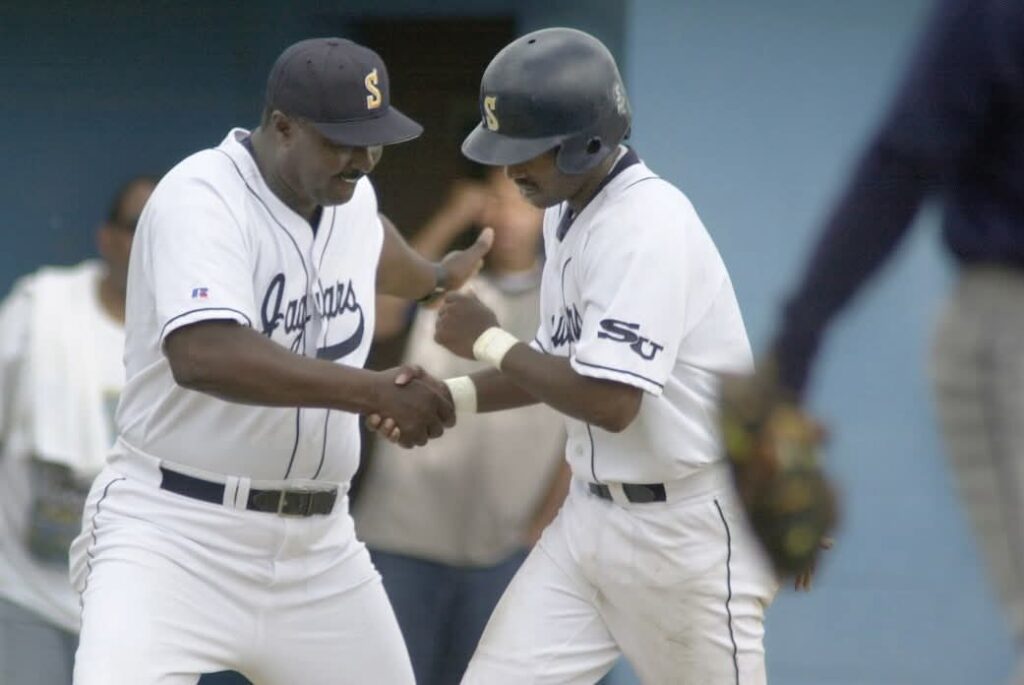
FIGURE AT SOUTHERN UNIVERSITY.
LONGTIME LSU COACH SKIP BERTMAN: ‘ROGER TOUCHED A LOT OF LIVES …’
He was an everyman, in so many ways, but an extraordinary one just the same.
Roger Cador gave it his all. Every day of his life.
“And he always had a smile on his face,” Ole Miss baseball coach Mike Bianco said in a telephone interview on Thursday afternoon.
Cador died this week, at the age of 74, after a long illness. The longtime Southern University head baseball coach was one of the finest men I’ve ever known, and that is not hyperbole.
Cador overcame one obstacle after another, growing up in Ventress, Louisiana, a Census Designated Place just a stone’s throw from New Roads, and he blazed a trail that made the world a better place.
Roger took the road less traveled to an amazing career in college baseball, one that encompassed 33 years as the Jaguars’ baseball coach. But he will remembered for a lot more than that.
He will be remembered for his kind disposition, his work ethic, his intelligence and devotion to the game, and his devotion to family, friends and scores of HBCU players and coaches. Shoot, umpires, too. Concession workers, opponents’ ragging sections, you name it …
It hit me all like a ton of bricks on Tuesday morning.
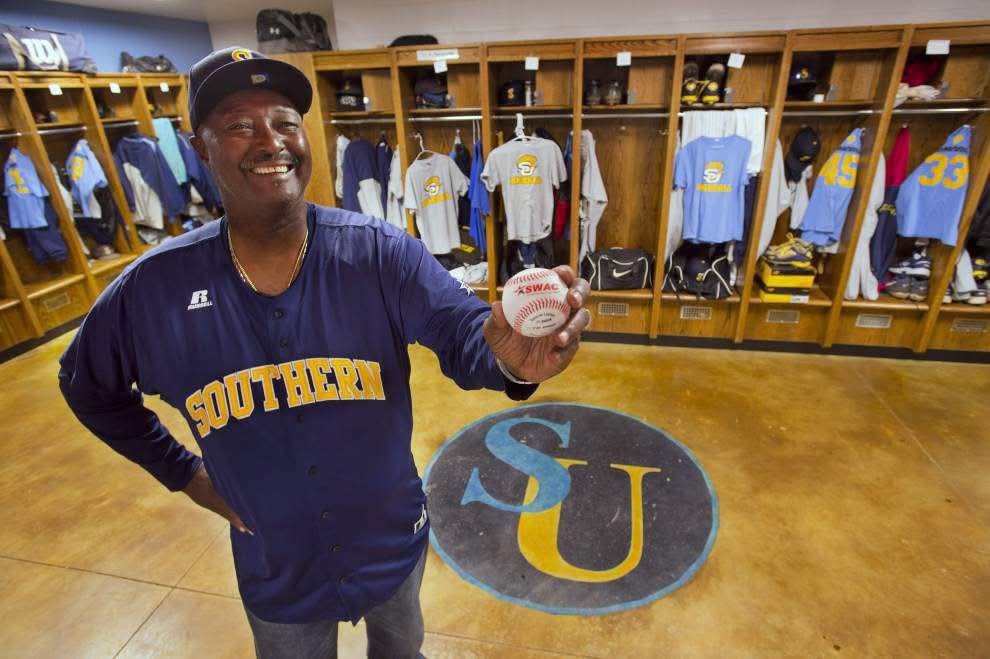
AS SOUTHERN UNIVERSITY’s
HEAD BASEBALL COACH.
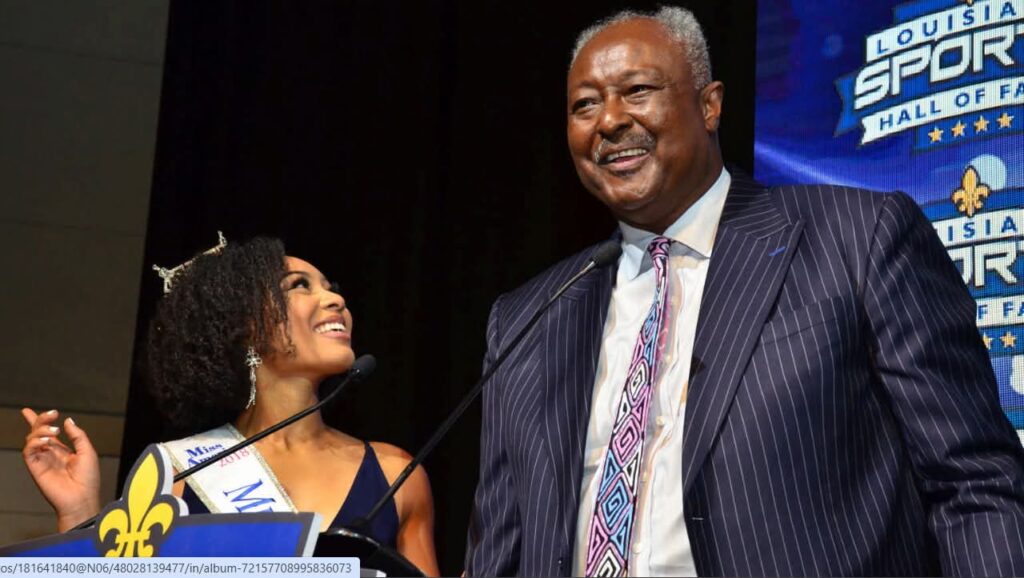
THE LOUISIANA SPORTS HALL OF FAME.
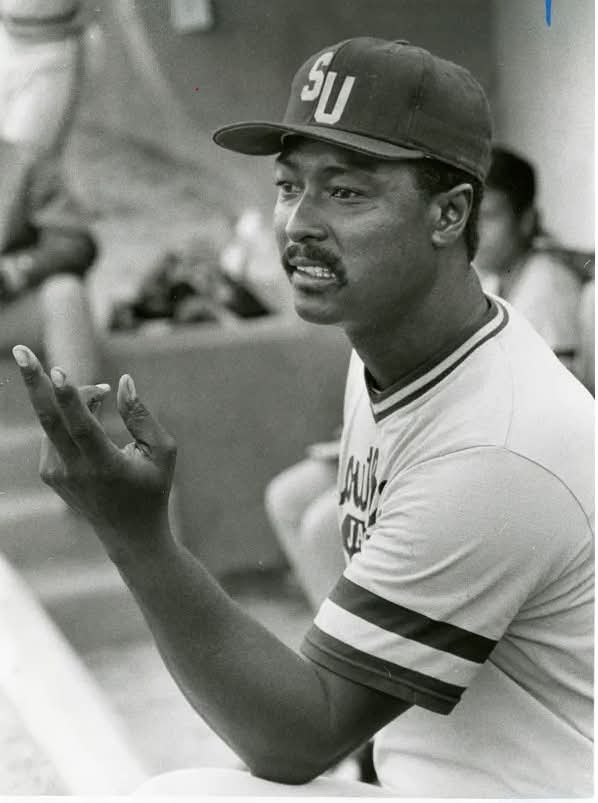
MINOR-LEAGUE BASEBALL
IN THE ATLANTA BRAVES’
ORGANIZATION.
The 6-foot-6 Roger Cador was larger than life, but he would never want you to think that way. He became synonymous with college baseball in the Deep South, in the HBCU community, but he was known far beyond those boundaries. More by accident than design, but that was Roger’s way.
Bust a hump, maintain your focus, keep your eyes on the prize.
Whatever that prize happened to be.
For Cador, it was his players, his coaches, his opponents, even media types. The next time I hear someone mutter a bad thing about Roger will be the first.
The long, lean son of a Louisiana sharecropper, he found his calling on the baseball field in his teenage years.
He never had a chance to play Little League ball, and his impoverished childhood would have gotten the better of a lesser man.
Another long, lean cat, mi compadre Dave Moormann, penned Roger’s autobiography a little more than a decade ago, when Cador was wrapping up a splendid 33-year run as the Southern University head baseball coach.
“Roger told me, more than once, that he couldn’t remember anything about his life until he was about 14 years old,” Moormann said on Wednesday afternoon. “Being a sharecropper’s son, I guess it was a defense mechanism … He wanted Joe Planas to write his book, but Joe had died a long time before we got together to write the book.
“The stories Roger told me … you wonder how he survived. But from the outside, looking in, you’d never have guessed it.”
No, you wouldn’t.
FORMER NEWSPAPER COLLEAGUE
DAVE MOORMANN IN 2014 …
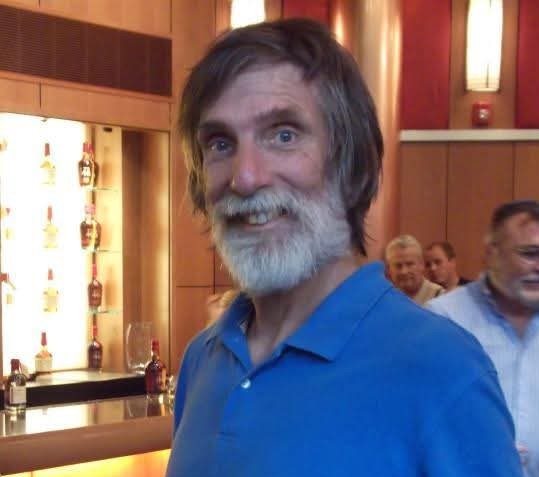
OF HIS NEWSPAPER CAREER IN LOUISIANA.
I worked alongside Dave Moormann, Joe Planas and a handful of other fine journalists at the Baton Rouge morning newspaper, for six long years (1985-90), and I remember meeting Roger Cador for the very first time.
It was about four months after I started toiling in Red Stick, and it was at Pete Goldsby Field, a property owned by the city in Northern East Baton Rouge Parish. There was billowing refinery smoke on that edge of town, also known as “NOC,” or North of Choctaw Drive. There was discarded needles, broken beer bottles and crabgrass scattered around the premises, and the ‘dugouts’ where nothing more than dilapidated benches inside a chain-link fence.
It was depressing, to be honest about it.
Located about 200 yards from BREC Memorial Stadium, a 22,000-seat football stadium alongside Interstate 110, Pete Goldsby Field was the Southern University home baseball park for decades, after a series of minor league teams came and went.
These days, Goldsby is the home ballpark of the Baton Rouge Community College baseball squad, and, in the summer months, the Baton Rouge Rougarou of the Texas Collegiate League. That’s a wooden bat league, of eight teams in Texas, Louisiana and Oklahoma, comprised entirely of college players looking to sharpen their skills for a possible baseball career.
In the 1980s, Pete Goldsby Field was a dreary place.
It sure didn’t stay that way.
Roger Cador saw to that.
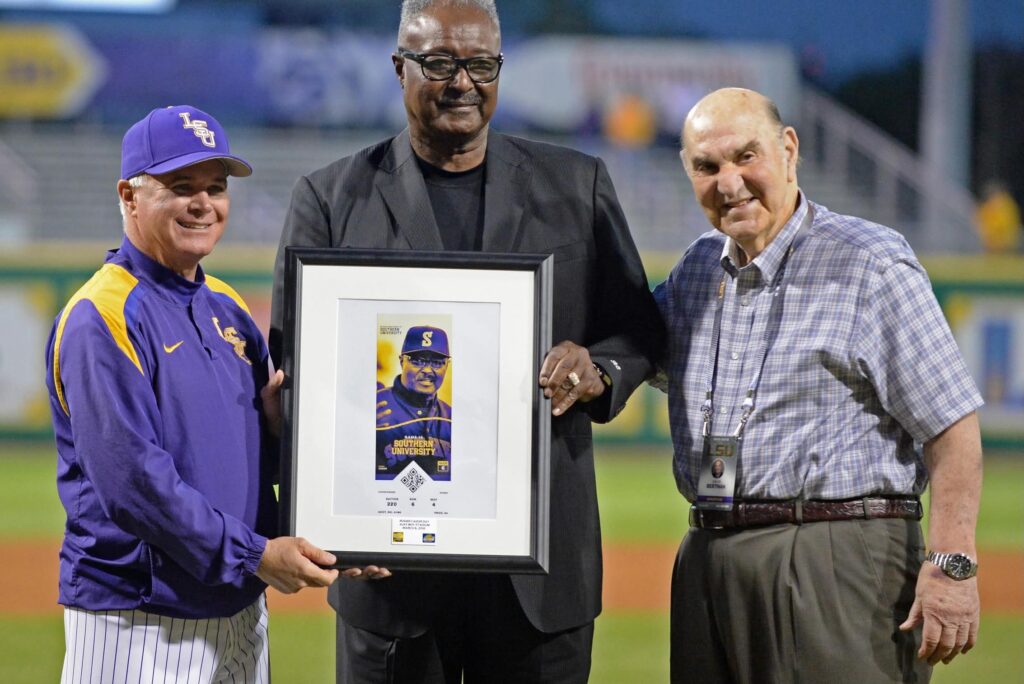
BY FORMER LSU COACHES
PAUL MAINIERI (LEFT)
AND SKIP BERTMAN.
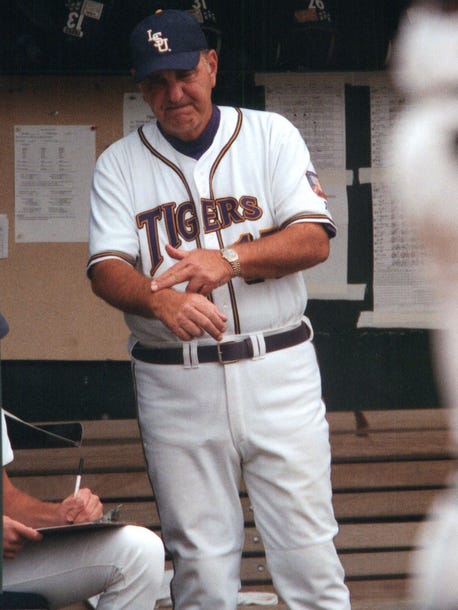
JUST ONE YEAR BEFORE ROGER CADOR
BECAME SOUTHERN’s HEAD COACH.
Skip Bertman, the architect of the finest college baseball dynasty known to man, was in his second season as LSU’s head baseball coach when Cador came to Southern in 1985. That happened to be my first year at the Baton Rouge morning newspaper, and before long, LSU baseball became my primary beat, along with the NFL’s New Orleans Saints in the fall.
Covering the Saints was nothing short of a dream for a struggling 28-year-old sports scribbler, but the lessons learned from covering Bertman’s squad, as well as Cador’s Jaguars, were ones that stuck with me over the years.
Bertman and Cador were both organized, cordial and dedicated to their profession.
These days, the 88-year-old Bertman is a widower in Baton Rouge, a wise, personable baseball man who made his LSU Tigers a national brand.
Bertman, a Miami native, guided LSU to the first five of the university’s eight NCAA national championships. He retired, as a coach, in 2001, before becoming the school’s athletic director for another decade or so. He arrived in Baton Rouge for the 1983-84 school year, a year or so before Cador got started at Southern, and about 18 months before I left Brazoria County, Texas, for a six-year run at the morning paper in Baton Rouge.
“Roger coached for so long … We were close, yes, but win or lose, Roger always was a gentleman,” Bertman recalled in a telephone interview on Wednesday afternoon. “I’m very proud of what Roger has meant, to the college baseball community, and what he’s done for Baton Rouge, Southern University and the SWAC …”
(That’s the Southwestern Athletic Conference, an HBCU league that stretches from Prairie View A&M University, on the outskirts of Metro Houston, to Bethune-Cookman University in Daytona Beach, Florida.
(It’s considered the premier college conference, for HBCU sports, and it has a rich history that includes legendary athletes such as the NFL’s Jerry Rice and the late Walter Payton, the NBA’s Avery Johnson and the late Willis Reed, and MLB’s Andre Dawson, a Hall of Famer from Florida A&M University, and Lou Brock, the longtime St. Louis Cardinals legend who died about five years ago at age 81.
(Lou played his college baseball at Southern University, leading the Jaguars to the NAIA national championship in 1959. Like Roger Cador, Mr. Brock was the son of a sharecropper in El Dorado, Arkansas, before the family relocated to Louisiana.)
Skip Bertman said he’s heard from “players and coaches, from LSU and Southern, and schools like Tulane, UNO and Alcorn State,” since Cador’s death.
“Roger touched a lot of lives,” Bertman said.
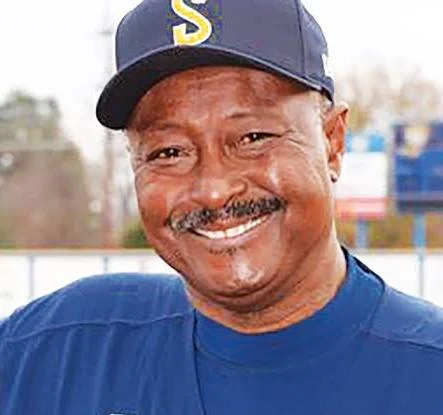
14 SWAC TITLES
WITH THE JAGUARS …
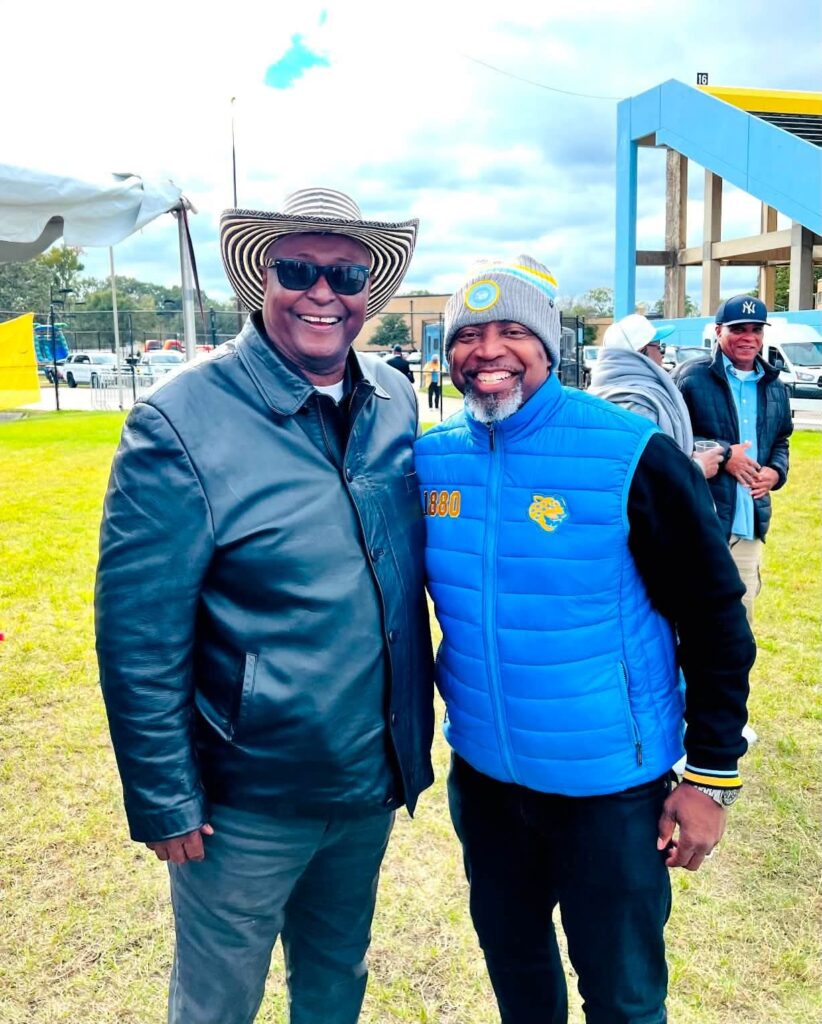
A LEGENDARY FIGURE
AFTER HIS COACHING DAYS.
Bertman remembers those formative years, for LSU and Southern, in the mid-80s, when the Tigahs would take the short drive “North of Choctaw” to square off with the Jaguars at Pete Goldsby Field.
“Roger did so much for his university,” Bertman said. “Roger played baseball and basketball at Southern, and he was drafted by the Atlanta Braves in the ’70s. Made it to Triple-A. He was an assistant basketball AND baseball coach at Southern, for a few years, before becoming the head coach in ’85 …
“He was welcome in the black community, and the LSU community, all over town, really. When we were moving out of the ‘old’ Alex Box Stadium (pronounced ‘Alec Box’), and into the new place, we had some light poles that we really weren’t sure what to do with. We weren’t going to need them at the new park. So I called Roger, who was one of the most charitable, friendliest guys I’ve ever known …
“Roger said, ‘Yeah, we could use them’ (at Pete Goldsby Field), so we had them delivered over there. Before long, Roger’s teams were playing on campus … I’m very proud of what Roger did for Southern University and Baton Rouge.”
Cador’s teams produced results, too.
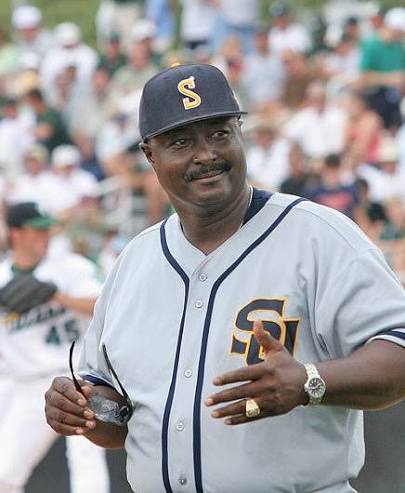
AS SOUTHERN’s COACH
AFTER THE 2017 SEASON.
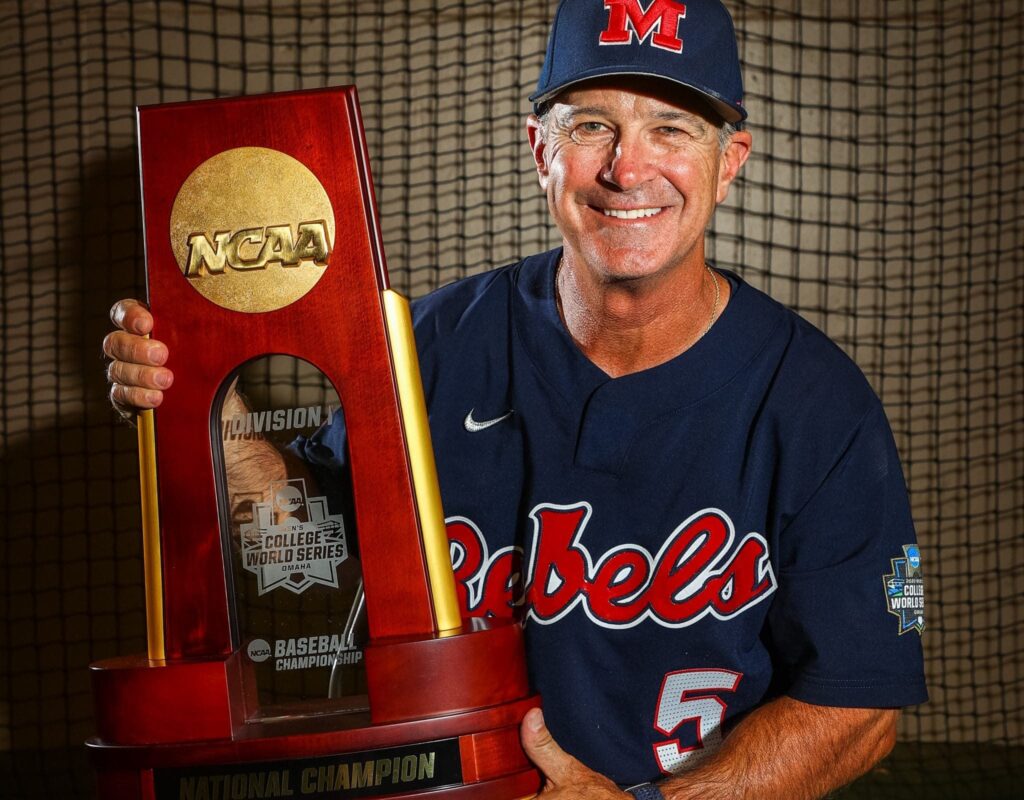
PLAYED AND COACHED AGAINST
ROGER CADOR’s SOUTHERN SQUADS.
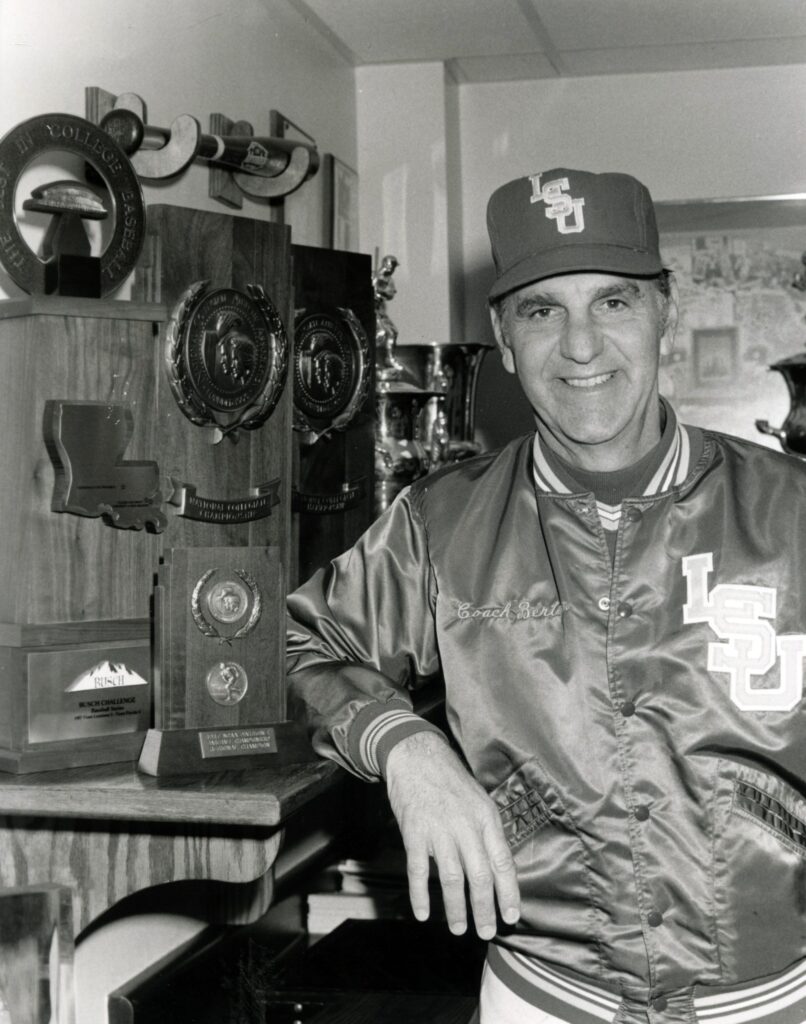
SKIP BERTMAN SAYS CADOR
‘TOUCHED A LOT OF LIVES …’
In 1987, Bertman’s LSU squad was coming off the school’s first appearance in the College World Series. It was a turbulent season, however, as Albert Belle, then known as ‘Joey Belle,’ was a one-man distraction with an explosive temper, something we’d see later during his MLB career with the Cleveland Indians and Chicago White Sox. At the SEC Tournament, in Athens, Georgia, a Mississippi State fan holding a long two-by-four taunted Belle from a hill above the right-field fence with racist slurs, and Belle charged through the bullpen to confront the man.
Understandably, I might add …
When the team returned to Baton Rouge, to get ready for the NCAA Tournament, Belle met with Bertman in Skip’s office. Belle had had a series of explosive moments, in his final season with the Tigers, and Bertman believed he had no choice but to dismiss him from the team. Three days later, LSU opened a six-team NCAA regional at Privateer Park, the home field of the UNO Privateers in New Orleans.
(The four-team regional concept, adopted in 1999, was much easier for coaches to manage, leading into Super Regional play and then the College World Series.)
The NCAA South II Regional played host to FIVE Louisiana squads, as the Pelican State had emerged as a college baseball hotbed by then. California State-Fullerton, one of the nation’s top-ranked squads, was the No. 1 seed, followed by No. 2 seed LSU, the University of New Orleans, Louisiana Tech, Tulane and Southern University.
Roger Cador’s Jaguars, the No. 6 seed, were paired with Cal State-Fullerton, in the opening game of the tournament, played in sweltering conditions at UNO. Skip Bertman’s LSU Tigers would face Tulane, a traditional rival, in the late game.
We’ll let Skip pick it up from there.
“Southern had a hard-throwing right-hander, Mike Harkey, and we found out later that Mike had started his college career at Fullerton,” Bertman recalled. “Our kids were at the hotel, in the air conditioning on Canal Street, but me and a couple of our coaches were at the game, at UNO. Fullerton was the second-ranked team in the country, I believe, and they were really good.
“Roger’s kids were at the top of their game, and Harkey was throwing gas. Southern won, 1-0, and that was the first time a team from an HBCU school had won in the NCAA (baseball) tournament. We’d wind up playing Fullerton, in the championship round, but they had to beat us twice to go to Omaha.”
LSU won its fourth game in as many days, defeating Cal State-Fullerton, 7-3, to return to the College World Series. The Tigers would go on to split their four games at Omaha’s Rosenblatt Stadium, and two years later, when the aforementioned Mike Bianco was the LSU catcher, they’d get back to the College World Series and finish in a third-place tie.
In 1991, when Bianco was a graduate assistant coach at LSU, the Tigers would win the first of FIVE national championships for Skip Bertman at LSU.
Roger Cador, meanwhile, would go on to compile an impressive 913-597-1 record in 33 seasons as Southern University’s head coach. He won FOURTEEN conference championships, during his time at Southern, with more than a dozen NCAA Tournament appearances.
Mike Harkey, the pitcher who defeated Cal State-Fullerton in 1987, would go on to pitch in Major League Baseball for about a decade. He, too, went into coaching, like Bianco, and several of Skip Bertman’s LSU players over the years.
“I didn’t know Roger all that well, but from a distance, as a player, and a coach, I had the ultimate respect for him,” Bianco said in a telephone interview on Thursday. “He changed the perception, of HBCU baseball, along with some guys like Bob Braddy, at Jackson State. Roger’s Southern teams would come up to play us, at Ole Miss, from time to time. He just continued to push forward, and brick by brick, he built a great program.”
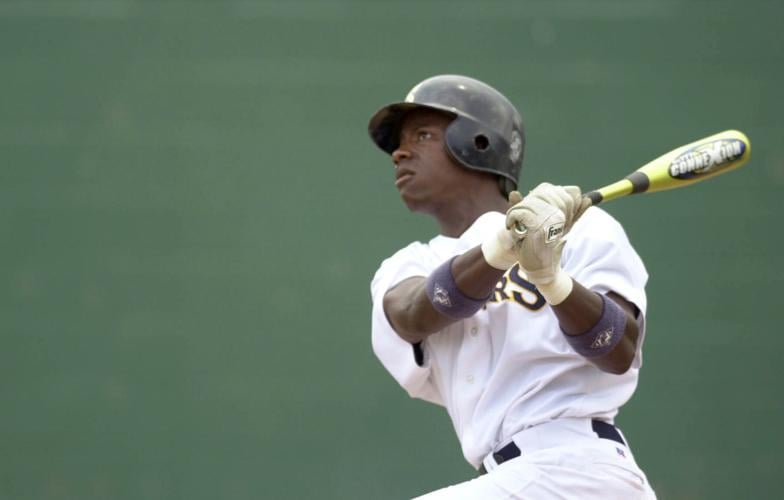
BECAME A FIRST-ROUND CHOICE
OF MLB’s MILWAUKEE BREWERS, AND
THE SECOND PICK OVERALL
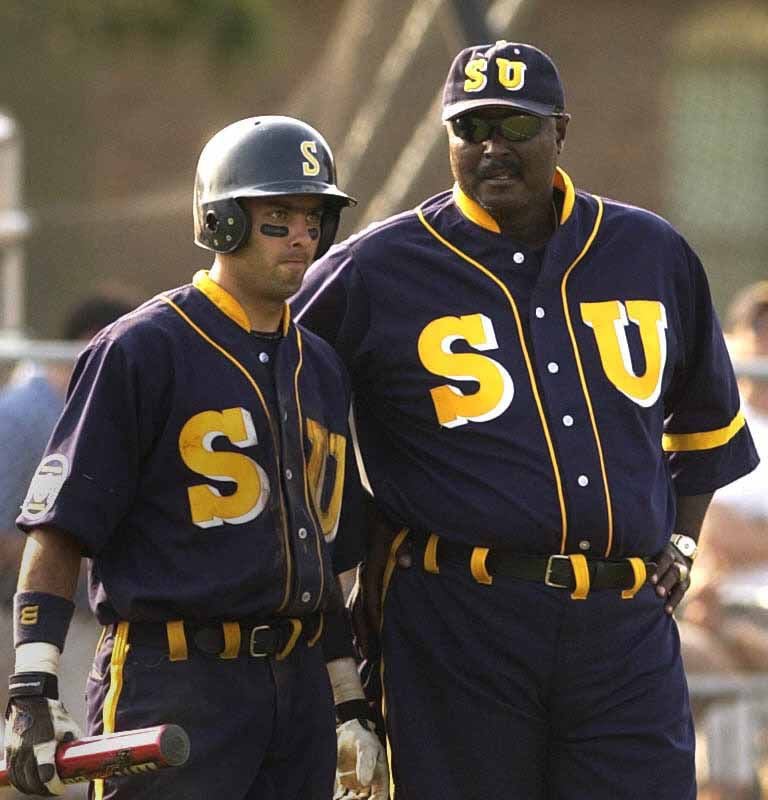
AS SOUTHERN’s HEAD COACH.
Roger became a friend, for me, too. I never really fit in, during my time in Baton Rouge, but Skip and Roger were two of my trusted allies. I left Baton Rouge in 1990, before moving on to New York City and then Brownsville, Texas, and then moving on to a job at the Biloxi-Gulfport newspaper in 1994. I wouldn’t leave the Coast, to return to Metro Houston, until 2012.
So I covered a handful of Roger Cador’s teams over the years. He was, without a doubt, one of the finest men I’ve ever known. A memorial service for Roger is planned for Monday, July 6, at the F.G. Clark Activity Center on the Southern University campus.
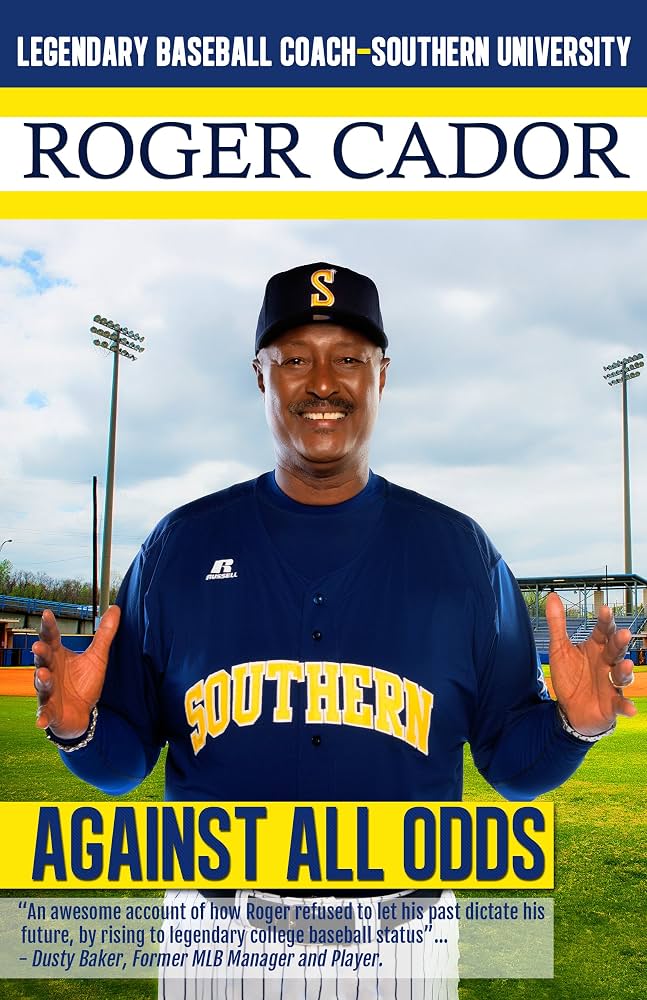
Mi compadre Dave Moormann served as the ghostwriter for Cador’s book, “Against All Odds,” which is still available in paperback on Amazon. Moorman recalled that Roger checked up on him, almost immediately, after Dave and Carol Moormann’s home in Livingston Parish, Louisiana, was destroyed by a series of floods in 2016.
“You always remember people like Roger,” Moormann said. “Baseball is such a big part, of our country’s history … and Roger Cador was a big part of that, particularly in Louisiana.”
Rest easy, Roger. You will be missed.
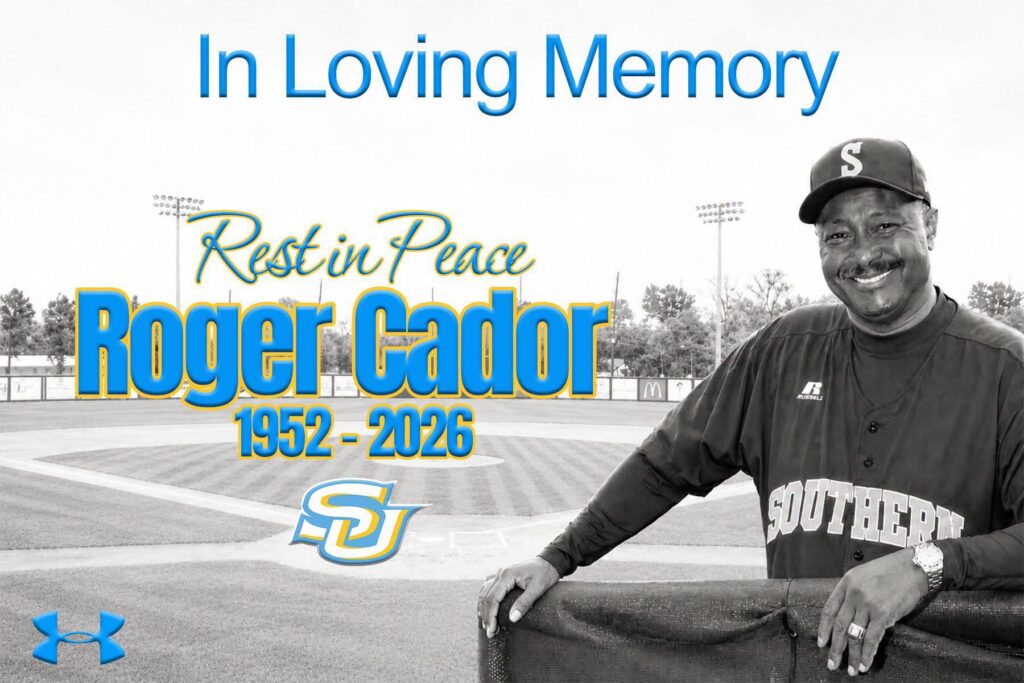
I’M THINKIN’ PIPER
AND ROGER WOULD
HAVE HIT IT OFF …